

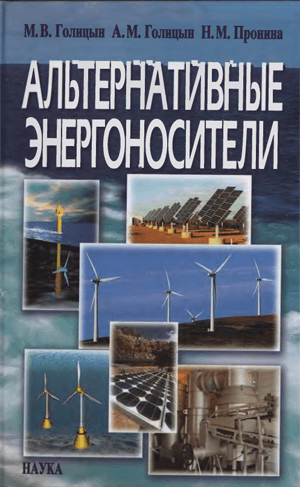
 Golitsyn – Alternative Energy Sources
Against the backdrop of the use of primary energy sources—oil, gas, coal, nuclear power, and hydropower—the book examines in detail the prospects for utilizing alternative energy sources, such as solar, wind, ocean, and geothermal energy, bioenergy, and unconventional sources of oil, gas, and oil shale. A comparative economic assessment of various energy sources is provided. The text substantiates the need for a significant increase in research and development aimed at improving technologies and reducing the costs associated with producing and utilizing alternative energy sources.
Golitsyn’s book *Alternative Energy Sources* is intended for a broad audience—including schoolchildren, university students, engineers, and researchers—interested in the future development of the global energy sector.
Given the slow but steady depletion of primary energy resources—primarily oil and gas—and the limited prospects for expanding hydropower and nuclear energy, many countries are conducting research into the wider use of alternative energy sources. These include peat, oil shale, bitumen, unconventional gas, geothermal energy, solar and wind power, ocean energy, and biosynthesis. Several countries have already achieved notable success in this area: methane is being extracted from coal seams; solar, wind, and hydrothermal power plants are in operation; biogas is produced from waste; and motor fuel is derived from biomass. Work on utilizing alternative energy sources continues.
An official directive has approved the Energy Strategy for the period up to 2020 (21), which places significant emphasis on the need to utilize renewable energy sources and local fuel types. In particular, the strategy notes the following:
The strategic goals for utilizing renewable energy sources are:
— reducing the consumption of non-renewable fuel and energy resources;
— lowering the environmental impact of the fuel and energy sector’s activities; — supplying decentralized consumers and regions that rely on long-distance or seasonal fuel deliveries;
— reducing costs associated with fuel transported over long distances.
Furthermore: Estimates indicate that the technical potential of renewable energy sources is approximately 4.6 billion tonnes of coal equivalent (tce) per year—five times the total consumption of all fuel and energy resources—while the economic potential is estimated at 270 million tce per year, representing just over 25 percent of the country’s annual domestic energy consumption. Currently, the economic potential of renewable energy sources has increased significantly due to the rising cost of traditional fuels.
The equipment available for renewable energy sources meets global standards.
In 2002, renewable energy sources accounted for 0.5 percent of total electricity generation (4.2 billion kWh), while the displacement of fossil fuels amounted to approximately 1 percent of total energy consumption, or about 10 million tce per year.
Experts estimate that by 2010, approximately 1,000 MW of electrical capacity and 1,200 MW of thermal capacity based on renewable energy sources could be brought online.
This study attempts to summarize the experience gained in this field and to evaluate the efficiency of using various energy sources in different regions and abroad.
The study draws on materials published between 1990 and 2003 in various sources, including the *Mining Encyclopedia* (Gornaya Entsiklopediya), monographs, collections of articles, and journals such as *Energiya*, *Energeticheskoye Stroitelstvo*, *Gidrotekhnicheskoye Stroitelstvo*, *Ugol*, and others. References to most of these sources are provided within the text. Figures included in the text are taken from journals such as *Energiya*, *Gidrotekhnicheskoye Stroitelstvo*, and others.