 Zolotnitsky – New gas fuel systems for cars
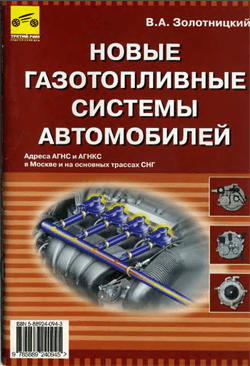
Zolotnitsky’s book, “New Gas Fuel Systems for Automobiles,” describes the design and operating principles of three generations of gas-cylinder systems used in cars with carbureted and fuel-injected engines running on liquefied petroleum gas, as well as liquefied and compressed natural gas.
Zolotnitsky’s publication, “New Gas Fuel Systems for Automobiles,” is intended for motorists who have equipped their vehicles with gas fuel systems, as well as those considering installing gas-cylinder systems.
Protecting the air in large cities from harmful pollutants is a global concern. According to Kompriroda, motor vehicles annually emit 120 kg of pollutants per capita. The calculation is simple: the environmental damage from burning one ton of gasoline amounts to 880,000 rubles, and the number of cars in the city is approaching three million, with a steady upward trend. An alternative fuel—gas—creates the preconditions for a healthier environment.
A car that pollutes the atmosphere, poisoning people and all living things, has no place on our roads. And the best way to make it environmentally friendly is to convert it to gas fuel.
As for environmental standards, the current outdated GOST standards from 1975 and 1985 are about to be replaced by new ones. In Europe, four similar standards have already been introduced (from EURO-1 to EURO-4), and each one tightens environmental requirements for vehicles.
Other countries are falling short of European environmental standards, and it’s imperative to get rid of the foul haze that has enveloped our cities as quickly as possible, especially in areas where our cars touch. Only the use of gas in vehicle fuel systems can improve the situation.
In recent years, new, advanced designs for devices running on alternative fuels to gasoline have been developed, such as fuel systems using liquefied petroleum propane-butane (LPG) and compressed or liquefied natural gas (CNG and LNG).
Modern gas fuel systems significantly reduce toxic engine emissions both by using environmentally friendly fuel (gas) and by employing special devices that burn the products of incomplete combustion. These devices, called catalytic converters, are significantly easier to use when using gas as fuel compared to gasoline. They last significantly longer in the exhaust systems of gas-powered vehicles.
The fuel systems described in Zolotnitsky’s book, New Gas Fuel Systems for Vehicles, comply with EURO-2 and EURO-3 emission standards.
The domestic market offers a variety of gas fuel systems for vehicles. But how can a driver who has chosen gas fuel systems choose the right one? Zolotnitsky’s book, “New Gas Fuel Systems for Automobiles,” will help you understand the various fuel systems available and purchase the one you need.