 Walker – Stirling Cycle Machines
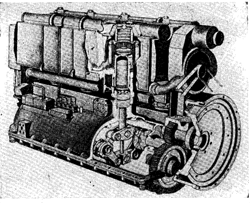
Walker’s book, “Engine Operations on the Stirling Cycle,” is dedicated to a new and promising type of heat engine—Stirling engines—which are used in power and refrigeration systems, heat pumps, and various transportation and technological devices. It provides a thermodynamic analysis of the Stirling cycle. Stirling engine design options with and without regeneration are discussed, along with calculation methods. Recommendations for the use of Stirling engines in various engineering fields are provided.
Walker’s book, “Engine Operations on the Stirling Cycle,” is intended for thermal engineers developing and researching heat engines.
With the Earth’s population growing and the rapid development of the energy sector as the basis for technological progress, coupled with the intensive development, exploitation, and depletion of natural energy resources, and the resulting significant changes and pollution of the Earth’s biosphere, ultimately impacting human health, science faces an urgent challenge: finding alternative energy sources and eliminating the consumption of fossil fuels in modern energy production to reduce the negative impact on the environment.
A new approach to the use of natural resources and the state of the environment is currently a major economic imperative, stemming from the limited reserves of mineral fuels in the Earth’s interior and the limited renewable capacity of the Earth’s atmosphere. For example, oil production began on an industrial scale just over a hundred years ago—only about a century after the industrial generation of electricity and the invention of the internal combustion engine, and less than fifty years after the industrial use of gas turbines (in the late 1930s). The 1973 energy crisis in Western countries made it clear that fossil fuel reserves, especially liquid fuels, are not unlimited.
An energy crisis, which is already being felt in a number of countries, is not imminent in the foreseeable future. Nevertheless, the future use of new technologies, compared to existing ones that primarily consume fossil fuels, will undoubtedly contribute to significant energy savings and environmental protection.
It is well known that energy production and conversion inevitably entail some form of environmental pollution, the causes of which are currently being examined in the broadest possible terms. The main sources of pollution in the Earth’s biosphere are industrial enterprises, power plants, and transportation systems, and one of the main causes of pollution is the combustion of coal, oil and petroleum products, and other fuels. Along with air, water, and soil pollution, environmental degradation is also associated with excessive noise, vibration, and heat dissipation. According to recent estimates, between 960 and 2,600 million tons of particulate matter and exhaust particles are emitted into the atmosphere annually. Environmental changes that have occurred on the planet, primarily over the past 50 years, are becoming increasingly noticeable, making it increasingly difficult for nature to neutralize and store industrial waste. Civilization—society—tends to increase energy consumption in all its forms, doubling approximately every 10 years, and environmental pollution will consequently increase.
Modern energy technology addresses not only purely energy issues; it encompasses a wide variety of methods for producing and applying various forms of energy for industrial and domestic needs. From this perspective, it is important to note that low-power energy converters such as internal combustion engines (used in mobile and stationary power plants, transportation systems, etc.) are currently the most common energy consumers and, consequently, one of the main sources of environmental pollution. An average-power engine (in a vehicle) emits approximately 1 ton of toxic substances in various compounds via exhaust gases over a year of operation: carbon monoxide, nitrogen oxides, unburned hydrocarbons, aldehydes, lead and its compounds, and others. In the United States, these engines account for up to 20% of the country’s total energy consumption (oil and petroleum products) and 60% of all atmospheric pollutants. A similar situation is observed in other industrialized countries**.
To combat various types of pollution caused by modern engines, many countries have developed new, more stringent requirements for exhaust gas composition and noise levels. However, the costs of improving combustion processes (layered formation of the working mixture, etc.), cleaning and neutralizing toxic components of exhaust gases…