 Levenberg – Power plants without fuel
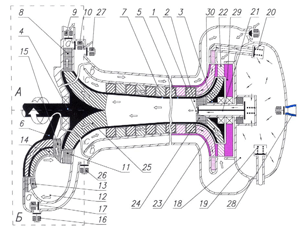
Levenberg’s book, “Power Plants Without Fuel,” examines environmentally friendly power plants based on turbo-generators, Stirling engines, and thermoelectric and thermionic generators with heat accumulators as thermal energy sources. Data is provided for determining the efficiency and selecting the parameters of power modules. A comparative assessment of the efficiency of various types of power plants with heat accumulators* is provided, as well as with other types of plants using chemical fuels and electric storage batteries.
Levenberg’s book, “Power Plants Without Fuel,” is intended for specialists involved in the design and construction of power plants with heat accumulators.
Solving a number of important national economic challenges—ocean exploration and development, the use of renewable energy sources, fuel conservation, and the creation of environmentally friendly means of ocean development—as outlined in the Main Directions of Economic and Social Development for 1986–1990. and for the period up to 2000, is associated with the development and creation of power plants using non-traditional energy sources.
One approach to addressing these challenges is the development of power plants that do not directly use chemical fuels. This involves the use of so-called secondary energy sources, of which thermal energy storage devices play an important role.
Power plants with thermal storage devices are currently used in various fields of technology and have potential for wider application. Their capacity, depending on the intended application, ranges from a few kilowatts to several tens of megawatts. Such plants can be used in applications where the use of chemical fuels is impossible or impractical. The absence of combustion processes and emissions makes power plants with thermal storage devices environmentally friendly. The ability to operate power plants without air allows them to be used for various ocean development applications. Such plants are easily assembled into power modules, which allows for the development of a unified power range for various consumers. The use of power plants with heat accumulators allows for a significant reduction in weight compared to traditionally used electric batteries.
Chapter 1 of Levenberg’s book, “Power Plants Without Fuel,” describes power plants with heat accumulators used in ocean exploration technology. Chapters 2 and 3 examine the efficiency of various types of heat accumulators designed for autonomous power sources, as well as the most efficient thermal energy converters (gas turbine converters and Stirling engines). Information on high-frequency electric generators is also provided. Chapter 2 4 and 5 provide recommendations for selecting the main parameters of energy modules based on a gas turbine generator and a squirrel-cage generator with thermal graphite accumulators, dependencies for determining their weight and size indicators, as well as an assessment of the efficiency of energy modules with direct conversion of the energy of thermal graphite accumulators into electrical energy. Chapter 6 provides a comparative assessment of the efficiency of various types of energy plants, which allows the use of the information provided when selecting the type of plant…